



-
THE REPRESENTATIVE OF HUMANITY
Between Lucifer and Ahriman
The Wooden Model at the Goetheanum
Judith von Halle, John Wilkes
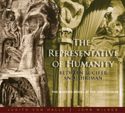
In conceiving his architectural masterpiece – the Goetheanum in Dornach, Switzerland – Rudolf Steiner designed a large wooden model featuring three main figures to be placed in a central position inside the building. Known as the Representative of Humanity, this sculpture shows a central, free-standing Christ holding a balance between the beings of Lucifer and Ahriman, who represent polar tendencies of expansion and contraction. On New Year’s Eve 1922, the Goetheanum was destroyed by fire, but the model – still in a process of creation and therefore housed in an external studio – escaped the flames.
With numerous full colour photos and illustrations, The Representative of Humanity offers a vivid introduction to this monumental, world-historic artwork. We can follow its evolution through photographic documentation of the many models created in its development: from six smaller versions to a full-size, plasticine construction. This latter model offers an impressive insight into the artists’ detailed intentions, having been repeatedly revised by Rudolf Steiner. It demonstrates the continual spiritual movement evident in the whole series of small models, and the metamorphic processes which developed over an eight-year period.
The authors offer indications regarding the realm and content out of which the work arose, the environment in which it is situated, and the artists who created it: Rudolf Steiner and the trained sculptress Edith Maryon. They also examine the intentions behind a work of art that addresses the destiny of the whole of mankind.
JOHN WILKES began restoration work on Rudolf Steiner’s and Edith Maryon’s sculptural and architectural legacy in 1965. A large number of wax and plasticine models had been deteriorating over the decades and were in urgent need of repair. Included was the nine metre high, preparatory plasticine model required for building the wooden sculpture in 1917. Casts were prepared of all models to guarantee their availability as creative study material into the future. Influenced by an extended study of Projective Geometry with George Adams, Wilkes later became involved in research on the effect of rhythmical movement on water quality, which led to the Flowform Method.
JUDITH VON HALLE, born in Berlin in 1972, attended school in Germany and the USA and subsequently studied architecture. She first encountered anthroposophy in 1997, and began working as a member of staff at Rudolf Steiner House in Berlin, where she also lectured. In addition she had her own architectural practice. She published her first book in 2005, and now works principally as a lecturer and author, having over 30 books in print. She lives in Berlin with her husband.
14 April 2026; RSP; 96pp, full colour photos and illustrations throughout; 22.5 x 25 cm; pb;
£25.00 ISBN 9781855842397