
- RUDOLF STEINER
- OTHER AUTHORS


-
NEW AND FORTHCOMING BOOKSRUDOLF STEINER
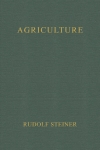
AGRICULTURE - SPIRITUAL FOUNDATIONS FOR THE RENEWAL OF AGRICULTURE
8 lectures and 4 discussions, Koberwitz, June 7–20, 1924
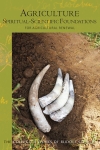
AGRICULTURE, SPIRITUAL-SCIENTIFIC FOUNDATIONS
for Agricultural Renewal
One hundred years after Rudolf Steiner presented his lectures on agriculture in 1924, the impact of his words are self-evident. Around the world, biodynamic principles are practised in thousands of thriving farms, vineyards and gardens, and Demeter certification for biodynamic produce is recognized internationally as a mark of quality.
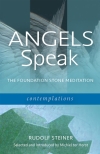
ANGELS SPEAK THE FOUNDATION STONE MEDITATION
A year after the burning of the first Goetheanum, during the eight days of the Christmas Conference 1923/24, Rudolf Steiner, together with the 800 people present, laid the Foundation Stone “in our hearts” as a meditation. Every day at ten o’clock in the morning, and on the last day also in the evening—nine times in total—he spoke the verses, invoking the angelic hierarchies, allowing their voices to sound for us in the spirit. The Foundation Stone is thus a purely spiritual text, not intended as information, but as meditation.
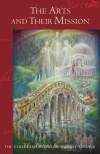
8 lectures, Oslo and Dornach, May 18 – June 9, 1923 (CW 276)
and the Work of the Priest
The imagery of the Book of Revelation – St John’s Apocalypse – has inspired centuries of interpretation, much of it symbolic or speculative. In this exceptional series of lectures, Rudolf Steiner approaches the least understood of Christian texts from a fundamentally different standpoint: that of direct spiritual perception and experiential knowledge.
Twelve lectures, held in Dornach and Bern from November 29 to December 21, 1918
(CW 186)
The lecture course in this volume was given by Rudolf Steiner in Dornach, Switzerland, in November and December of 1918, shortly after the armistice that brought the First World War to a close. Throughout the war, those living in Dornach could hear the thunderous drumfire on the Western front in neighbouring Alsace, as they worked to build a house of peace, the First Goetheanum, on the Dornach hill. Rudolf Steiner often remarked how extraordinary it was that such a group of people—German, French, English, American, Russian—came together in the midst of the chaos and destruction, setting aside the fact that their nations were at war, in order to build something of spiritual significance for all humanity.
THE DESTINIES OF INDIVIDUALS AND NATIONS
Amid the darkness of World War I, Rudolf Steiner offered a profoundly spiritual response to the tragedy of global conflict. With compassion and clarity, each of these lectures begins with a reverent verse honouring the fallen, before unfolding a deeper perspective on the unseen forces shaping human destiny.
Nine lectures held in Berlin on October 23, 1911, and between March 19 and June 20, 1912 (CW 133)
in Cosmic and Human History
In a broad-ranging series of lectures, Rudolf Steiner shines new light on the spiritual background to the outbreak of the Great War in Europe. Spiritual entities stand behind the various peoples of the world, he says. He describes how these beings – Folk Souls – relate to the cultural diversity of Europe, America and the East, and speaks of their individual tasks and destinies in relation to the deeper causes of the catastrophic war. Central Europe has the particular mission of mediating between the Western world, the Slavic countries and by extension the East. Steiner alleges that Western secret societies consciously suppressed the spiritual life of this central cultural region through malign activities. These same brotherhoods exploited H. P. Blavatsky’s occult faculties for their own ends.
EURYTHMY AS SPEECH MADE VISIBLE
Speech Eurythmy Course
With these fundamental lectures on speech eurythmy – given just months after his course entitled ‘Eurythmy as Visible Singing’ – Rudolf Steiner completed the foundations of the new art of movement. In connecting to the centuries-old esoteric and exoteric Western traditions of ‘the Word’ – the creative power in the sounds of the divine-human alphabet – he gave it concrete form and expression in the performing arts, education and therapy. Although aimed primarily at the professional concerns of eurythmists who perform, teach or work as therapists, the lectures offer a wealth of suggestions and insights to anyone interested in the arts.
EURYTHMY FORMS FOR THE CALENDAR OF THE SOUL
These eurythmy forms and indications (CW A 23/2), published here for the first time in English, were given by Rudolf Steiner for the weekly verses of The Calendar of the Soul. The wealth of forms and metamorphoses in the cycle of the year is study material for all students of eurythmy. The forms can also be stimulating for those who are not practicing eurythmists but are interested in deepening their relationship with the calendar’s verses and the cycle of the year.
From the Akashic Record
Through his intuitive reading of the Akashic Record – the living memory of Earth and cosmos – Rudolf Steiner described dimensions of the life of Jesus Christ that extend beyond the four canonical Gospels. After years of inner struggle and rigorous self-examination, Steiner began presenting these insights publicly in 1913. He spoke with great care and restraint, fully aware of the responsibility involved, yet convinced that such knowledge was necessary for a new, conscious understanding of Christ.
Documents, Propaganda and Spiritual Reality
Reflecting on the forces that had brought catastrophe to Europe, Rudolf Steiner discusses how sound social judgement can be formed amidst the challenges of conflicting interests, ideology and propaganda. He references contemporary documents, political developments and the actions of social movements, emphasising the necessity of grounding judgement in facts whilst cultivating the inner capacities required to perceive the spiritual dimensions of social life.
FOUNDING A SCIENCE OF THE SPIRIT
‘Everyone can derive joy and hope from the communications of another, for what we are told about the higher worlds is not mere theory, unrelated to life. As its fruits, it brings us two things we must have if we are to lay hold of life in the right way – strength and security – and both are given in the highest measure.’ – Rudolf Steiner
Fighter for Freedom
Translated by Margaret Ingram deRis
Immediately upon reading Nietzsche’s Beyond Good and Evil in 1889, Rudolf Steiner recognized a kindred spirit—a courageous fighter for the freedom of the human individuality who waged a fierce but unconscious battle against the unspiritual views of the age.
Knowledge of the cosmic significance of Christ and his mission, once experienced intuitively, has faded over the centuries. As theologians and historians of the Church critically scrutinized the Gospel records, their focus shifted from a gnostic vision of Christ to the human figure of ‘the simple man’, Jesus of Nazareth.
An Impulse of Transformation and Resurrection
‘There will be a resurrection – a resurrection that should not be imagined politically… but it will be a resurrection. Goetheanism still rests in the grave as far as external culture is concerned. But Goetheanism must rise again.’
THE GOSPEL OF JOHN AND THE OTHER THREE GOSPELS
‘What is the Christ-event? It is a confluence of all preceding philosophies and religious streams of humanity… united in Palestine; and they were expressed in the Gospels according to the different types of initiation of the one or other Evangelist.’ – Rudolf Steiner
Speaking just months after the end of the First World War, Rudolf Steiner urges his audience to awaken to the practical relevance of spiritual knowledge. Serious engagement with contemporary spiritual-scientific concepts can awaken healthy forces of the will, which in turn facilitate constructive action in the outer world. Conversely, ideas that are remnants of a previous age – echoed in empty phrases and dogmas – only hinder our ability to think with the consciousness demanded by the times, destroying the potential for true social initiative.
Human Responsibility for World Evolution through Our Spiritual Connection with the Earth and the World of the Stars
“These two things—knowledge of the human being and feeling for the entire cosmos—these are what give the human being equilibrium. But this he can find if, in the most modern sense, he can really grasp the Christ mystery, grasp it as anthroposophical spiritual knowledge can give it to him. For there we speak of Christ as a cosmic being that has descended to the earth from cosmic infinitude. We learn to feel cosmically, and need only imbue this cosmic feeling with content. This we can do only through anthroposophical spiritual science, otherwise the concept of Christ remains empty for us. The concept of Christ turns into mere phrase if we do not grasp the cosmos itself as human.”—Rudolf Steiner, Dornach, January 30, 1921
What convinces us of the truth of a point of view? Why do we find it difficult to understand or accept differing perspectives? What are the inner foundations of our knowledge?
THE HUMAN BEING AS BODY AND SOUL IN RELATION TO THE COSMOS
Human Evolution and the Soul and Spirit of the Universe, Part I
‘That is the ideal towards which Ahriman is striving: to destroy the individuality of human beings in order, with the power of human thinking, to transform the earth into a web of gigantic thought spiders – but real spiders. That is the ahrimanic goal from which we must escape by really imbuing ourselves with the spirit Word: “Not I, but the Christ in me”.’ – Rudolf Steiner
THE HUMAN BEING AS SPIRITUAL BEING EVOLVING THROUGH THE COURSE OF HISTORY
Human Evolution and the Soul and Spirit of the Universe. Part II
‘If we lived only in worlds of spirit, as we do between death and a new birth, we would never be able to acquire freedom there. It is something we can only achieve by our efforts within the physical world...’ – Rudolf Steiner
HUMAN QUESTIONS AND COSMIC ANSWERS
‘In the case of a solar eclipse, the evil that has spread over the earth can be carried out into the cosmos to wreak more havoc there, whereas in the case of a lunar eclipse, people who absolutely want to be possessed by evil thoughts can receive them from the cosmos.’
and the Experience of Tone
Introduction by Dorothea Mier
“A tone is at the foundation of everything in the physical world.”
An Extension of Goethe’s Morphological Thinking within the Realm of Human Movement
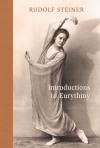
Introductions to eurythmy performances, 1913–1924 . This volume features introductory addresses given by Rudolf Steiner to the first audiences of the newly minted art of eurythmy. Before each eurythmy performance at which he was present, Steiner gave such an introduction. His intention, as he remarked on several occasions, was not to elucidate the meaning of eurythmy intellectually—a vain and inartistic endeavor—but rather to orient the audience to this new undertaking in the realm of art. Steiner took many approaches to this end, describing in his introductions a range of themes, from the origins of eurythmy as a Goethean art form to its role in pedagogy and therapy. As this volume gathers a large collection of these introductions, repetition is inevitable but not without value. A slight nuance of expression can awaken new insight.
Cosmic Influences and the Spiritual Task of Northern Europe
“Times have become serious; they have become so serious today that we must of necessity look upward from the narrowly defined events occurring within the limited horizon—which the majority of humanity prefers to recognize as the only legitimate one—to the cosmic expanses, also to the cosmic expanses of human soul-spiritual experiences. This is where we witness the cosmic turning point in time. If we become aware of this cosmic turning point in time, then we become aware that a cosmic New Year of the spirit must begin for humanity.”—Rudolf Steiner, New Year’s Eve lecture, 1921/22
Bilingual Edition (CW 26)
“Anthroposophy is a path of knowledge that would guide the spiritual in the human being to the spiritual in the universe.”
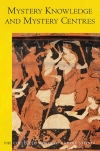
MYSTERY KNOWLEDGE AND MYSTERY CENTRES
Drawing on decades of spiritual research, Rudolf Steiner explores the mystery traditions, sacred centres and paths of initiation that have shaped humanity’s relationship with the spiritual world across the ages. From the ancient sanctuaries of Ephesus, Hibernia, Eleusis and Samothrace to the Rosicrucian movement of the Middle Ages, he traces the evolution of esoteric wisdom and its continuing significance for modern spiritual life.
Translated by Pauline Wehrle
Abounding in lively anecdotes and fresh insights, these lectures draw the reader into a rich contemplation on the nature of necessity and freedom in the world and in human life. A master of the art of the lecture, Rudolf Steiner brings together apparently disparate elements, resolving contradictions into a higher unity, showing us that far from being mutually exclusive, necessity and freedom are intimately interwoven in the intricate tapestry of life.
and the Christ Experience of the Twentieth Century
The constitution of the human soul has undergone a profound transformation in recent centuries. With the rise of ‘I’-consciousness, individuality and intellectual thought have moved to the foreground, opening a path toward freedom and self-determination. Yet this gain has come with a loss: the vivid, instinctive spiritual perception of earlier epochs has faded. In this unique series of lecture, Rudolf Steiner traces this decisive shift in consciousness and situates it within a wide panorama of world history.
OLD AND NEW METHODS OF INITIATION
Drama and Poetry in the Change of Consciousness in Modern Times
What are the key differences between the contemporary spiritual path and that of the ancient mysteries?
ON PHILOSOPHY, HISTORY, AND LITERATURE
Lectures at the Worker Education School and the Independent College, Berlin, 1901–1905
Steiner’s approach was at first a surprise for the students, who had been schooled in Marxist thought and tended to view all spiritual matters as ‘byproducts’ of material, economic processes. For them, it was questionable whether the spiritual striving of individual human beings could really be a driving force in history. Steiner knew the soul disposition of his students and the ‘inexpressibly tragic situation’ that the proletariat’s intense desire for knowledge had so far been ‘satisfied only through the grossest form of materialism.’ But the materialistic ideas that had been absorbed by the workers from popular scientific literature and from Marxist writings contained ‘partial truths.’ (introduction)
Conversations and Human Relations:
Inner Aspects of the Fundamental Social Law and The Threefold Social Organism
Selected and Annotated by Gary Lamb
“We live in [a time when] human beings must become independent. But on what does this depend? It depends on people’s ability...to become self-assertive, to not allow themselves to be put to sleep [in their thinking]. It is the antisocial forces that require development in this time, for consciousness to be present. It would not be possible for humanity in the present to accomplish its task if...these antisocial forces did not become ever more powerful; they are indeed the pillars on which personal independence rests. At present humanity has no idea how much more powerful antisocial impulses must become.” — Rudolf Steiner (Dec. 12, 1918)
ORIGINAL IMPULSES FOR THE SCIENCE OF THE SPIRIT
Christian Esotericism in the Light of New Spiritual Insights (CW 96)
Summaries based on notes taken by members of the audience of twenty lectures given in Berlin between January 29, 1906, and June 12, 1907 (CW 96)
The Spiritual Background to Human History
In these foundational lectures, Rudolf Steiner presents a bold and spiritually alive understanding of human evolution and our deep connection to the cosmos. Far more than a philosophical inquiry, this work is a challenge to the assumptions of materialism and an appeal to reawaken to our spiritual tasks.
These inspirational lectures offer a compelling introduction to a modern path of spiritual development rooted in esoteric Christianity. Rather than drawing solely from historical traditions, Steiner presents a renewed spiritual science – anthroposophy – based on firsthand research.
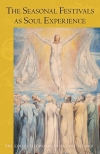
THE SEASONAL FESTIVALS AS SOUL EXPERIENCE
The Human Being in Relation to Individual Spiritual Beings
“The true value of the Anthroposophical Society can only be assessed by verifying whether it understands not only dead anthroposophy, which concerns itself with what is past, but whether it also understands living anthroposophy. Living anthroposophy can also be a sum of flaming sparks! But these sparks of fire will be inside a temple that is not made of external material. Physical flames consume temples that consist of outer materials. The flames of genuine spiritual enthusiasm, of true spiritual life—which must permeate the temple because they must illuminate it with what lights up in the spirit—these flames cannot destroy the temple; they can only give an ever more glorious form to this temple. Let us think of what living anthroposophy is; let us think of it as the fiery flame that will lead us ever further, like the living spirit of anthroposophy itself—which shall lead us to the further evolution of humanity and to the rebuilding of what is now in such an evident decline.”—Rudolf Steiner, Berlin, May 23, 1923
SOCIAL AND EDUCATIONAL QUESTIONS
A Spiritual-Scientific Approach
In the aftermath of the First World War, as Europe grappled with social upheaval and the collapse of long-established political and cultural certainties, Rudolf Steiner turned his attention to the urgent question of how society might be renewed from its very foundations. Here, he argues that lasting solutions cannot arise from political programmes or economic reforms, but require a transformation in the way human beings think about the relationship between cultural, political and economic life. Central to these lectures is Steiner’s vision of social threefolding, presented not as an abstract theory but as a practical response to the realities of modern materialistic civilisation.
‘What underlies the entire thrust and direction of these lectures is that we are not dealing with some arbitrary programme or scheme; we are not dealing with the intentions or opinions of this or that social class. Rather, it is a matter of tapping into what prompts the deepest, most realistic impetus for the coming decades in human evolution…’
THE SPIRITUAL BACKGROUND TO THE FIRST WORLD WAR
With the unprecedented global conflict of the First World War as an overarching theme, Rudolf Steiner addresses timeless issues such as the search for harmony between peoples and nations, the development of the human capacity for love, the contemporary presence of Christ, and the questions of reincarnation and life after death.
in the Historical Development of Humanity
‘When you perform a ritual, it is an appeal to the spiritual powers of the universe, an appeal to the powers that are meant to connect with the earth precisely through what people do...’ – Rudolf Steiner
Teaching Children with Developmental Disabilities
In the summer of 1924, in the final months of his lecturing career, Rudolf Steiner delivered this groundbreaking, foundational course on anthroposophic therapeutic education. Directed at teachers, physicians, carers and therapists, these twelve lectures weave together spiritual insight, educational practice and compassionate observation, offering a holistic approach to understanding and supporting children with developmental disabilities.
THE TENSION BETWEEN EAST AND WEST
“In ordinary consciousness, we combine our thoughts logically and thus make use of thinking to know the external sensory world. Now, however, we allow thinking to enter into a kind of musical element, but one that is undoubtedly a knowledge element; we become aware of a spiritual rhythm underlying all things; we penetrate into the world by beginning to perceive it in the spirit. From abstract, dead thinking, from mere image-thinking, our thinking becomes a thinking enlivened in itself. This is the significant transition that can be made from abstract and merely logical thinking to a living thinking about which we have the feeling it is capable of shaping a reality, just as we recognize our process of growth as a living reality.” —Rudolf Steiner
-
NEW AND FORTHCOMING BOOKSOTHER AUTHORS
ANTHROPOSOPHICAL WORLD SOCIETY AND ITS SCHOOL FOR SPIRITUAL SCIENCE
Peter Selg
“When thousands are in the initial vanguard of a movement, these thousands have a higher, more potentized obligation...they have the obligation to practice, in every detail, greater courage, greater energy, greater patience, greater tolerance, and above all greater truthfulness in all things.” — Rudolf Steiner (Dornach, June 16, 1923)
- the working together of three great leaders of humanity
Bernard Lievegoed
After years of being difficult to obtain, this small book, The Battle for the Soul, is now being brought back into print in the English language.
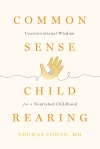
Unconventional Wisdom for a Nourished Childhood
Thomas Cowan, MD
Can we raise healthy children in a toxic world? Yes, we can!
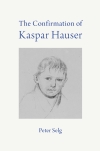
THE CONFIRMATION OF KASPAR HAUSER
Peter Selg
During the 2018 Kaspar Hauser Festival in Ansbach, Germany, Peter Selg assumed the task of understanding the individuals in Kaspar Hauser’s life and comprehending their significance for his destiny. He begins by unfolding the sociopolitical and philosophical milieu during Hauser’s life, starting with Friedrich Hölderlin and other significant luminaries of the time. A fellow student and friend of Hölderlin said of Kaspar Hauser, “His fine facial features, his gentle expression, his beautiful bearing, his carefully tended attire, and the unmistakable loftiness expressed in his being have always remained with me,” saying further, “Whoever saw him loved him, and whoever became acquainted with him remained his friend.”
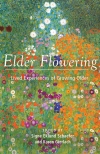
Lived Experiences of Growing Older
Edited by Signe Eklund Schaefer and Karen Gierlach
The "social art" of biography work has grown from the insights of Rudolf Steiner's spiritual science—insights that have proved useful in identifying and exploring the archetypal rhythms and milestones of human life. The most well-known, even obvious, of these are the roughly seven-year rhythms of early childhood, childhood, and adolescence, culminating in the transition to adulthood around the age of twenty-one.
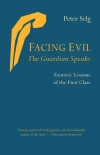
THE GUARDIAN SPEAKS
Esoteric Lessons of the First Class
Peter Selg
“We, the people of the fifth post-Atlantean period...we have to resolve, to the greatest extent possible and in a way that is filled with the power of life, the problem that one can call the problem of evil. I ask you to think about this in some depth. The fact that evil, which will approach the human being of the fifth post-Atlantean period in every possible form and will do this in such a way that the human being will have to resolve the very nature and being of evil scientifically, will have to come to grips, in all his or her loving and hating, with everything that stems from evil, and battle and wrestle with evil’s resistance to impulses of the will; all this belongs to the task of the fifth post-Atlantean period.” — Rudolf Steiner, Goethe’s Faust in the Light of Anthroposophy, p. 85)
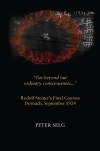
FAR BEYOND OUR ORDINARY CONSCIOUSNESS
Rudolf Steiner’s Final Courses, Dornach, September 1924
Peter Selg
“In September 1924, all of us who attended the new courses in Dornach felt we were living far beyond our ordinary consciousness. We felt lifted into another sphere; we all looked different, all seeing and hearing beyond our own capacities. When we looked at one another, we said, Is that really him? It was an incredible and indescribable experience. We were living in a world of spirit that was, of course, far beyond our own powers. There were moments during the final lectures of the pastoral medicine course when Rudolf Steiner emanated so much love and spirit that it was hard to listen to his actual words.” (Willem Zeylmans van Emmichoven)
A play by Glen Williamson
Glen Williamson
Taken as a biographical whole, the "final act" of the remarkable life story of Rudolf Steiner, the original and preeminent spiritual warrior of the twentieth century, begins with the destruction by fire of the original Goetheanum building on New Year's Eve 1922 and proceeds through the almost unfathomable exertions of creativity that followed before his death in 1925.
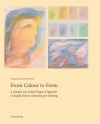
A Glimpse into Gerard Wagner's Approach to Rudolf Steiner's Indications for Painting
Caroline Chanter
This book offers insight into how Gerard Wagner developed his work on the basis of Rudolf Steiner’s indications for painting. Fundamental colour experiments illustrate his methodical approach, while examples of his late work show the living, etheric quality he achieved in his watercolour painting. In appreciation of Rudolf Steiner’s contribution toward the evolution of painting, Wagner wrote the following:
“Whoever attempts to tread this path can come to the conviction that the indications of Rudolf Steiner, if they are sufficiently penetrated and experienced, can lead one to grasp the creative formative forces of colour and to create within this life element without harming it. By giving us such pictures of life shaped by colour, Rudolf Steiner has set goals for a far future of painting.”Laying the Foundation for an Expansion of the Art of Healing in accordance with Spiritual-Scientific Insights
Rudolf Steiner and Ita Wegman
Bilingual Edition / Zweisprachige Ausgabe (CW 27)
Albert Schmelzer
The Goetheanum glass windows – designed by Rudolf Steiner in collaboration with the Russian artist Assja Turgenieff – give artistic form to the spiritual and architectural vision of the Second Goetheanum. Through colour, shape and movement, the windows portray the stages of an inner path of development. Their motifs explore profound human themes: the quest for self-knowledge; the struggle to achieve inner equilibrium between forces of hardening and dissolution; the origins of thinking, feeling and willing and their rightful interplay; encounters with the thresholds of birth and death; and wider perspectives on human and cosmic evolution. Through attentive viewing and contemplation, the windows open an experiential gateway into the spiritual dimensions of human existence.
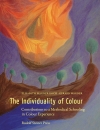
Contributions to a Methodical Schooling in Colour Experience
Elisabeth Wagner-Koch
Gerard Wagner
‘What is postulated here is not the dogmatic laying down of a way of working. Rather the aim is to make evident one possible means of access to an experience of the colour world... and guide actual practice to Rudolf Steiner’s sketch motifs – to their eminent educational power – for we recognize in them a path that can become of great significance to the developing human soul.’ – From the Introduction
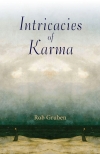
Rob Gruben
The dual reality of karma (or destiny) and reincarnation form the basis of modern spiritual-scientific investigation. To begin with, it is therefore of primary importance to gain insight into the themes of one’s own life. Although what is discovered can be seen as being of a very personal nature, the substance of our lives, and destiny itself, do follow spiritual laws and always appear in the light of a higher purpose. Thus it is possible, even in the case of such a personal subject as karma, to describe general or recurring tendencies.
and the Clinical-therapeutic Institute
A Photographic Documentation
Mirela Faldey and Peter Selg
“Ita Wegman is not only an inspiring genius of anthroposophy but a healing genius for the anthroposophical art of healing. Her very being harbors within it breath, courage, greatness.” —J. E. Zeylmans van Emmichoven
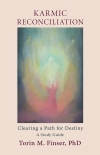
Clearing a Path for Destiny: A Study Guide
A Workbook for Spiritual-Scientific Study with Excerpts from Works by Rudolf Steiner
Torin M. Finser
Why study karma and reincarnation?
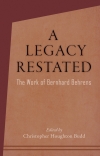
The Work of Bernhard Behrens: Four Essays with Current-day Reviews
Bernhard Behrens
Edited by Christopher Houghton Budd
“Until true individualism—meaning not the continuation but the overcoming of egoism—has the strength to win through against and transform the artificially galvanized group spirits [from the past], the task of culture cannot be fulfilled. Group interests will continue to act as mutual enemies.” — Bernhard Behrens
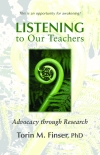
Advocacy through Research
Torin M. Finser
This book (first published as Silence Is Complicity) began life at an Antioch University Waldorf program for educators to introduce students to action research, a philosophy and methodology for transformative change through the process of taking action and doing research. This revised and expanded edition focuses on research and the inner life, indigenous research methods, and much more—all to empower teachers and support their enthusiasm for learning and developing new curricula. Teacher research goes beyond personal understanding to a level of documented inquiry that holds up to public scrutiny while also challenging misguided funding, tests, and legislation.
Bernard Lievegoed in His Own Words
Frans Lutters
This life story of Bernard Lievegoed (1905–1992), skilfully crafted by Frans Lutters, uses Lievegoed’s own writings to weave a biography that transcends a tale of a single man’s tragedies and triumphs.
Life Stories of Social Engagement
Anthroposophy and Social Reform
Edited by Christopher Schaefer
What can anthroposophy, a spiritual movement started by Rudolf Steiner more than a hundred years ago, offer an ailing world? Much, very much, it turns out.
THE REPRESENTATIVE OF HUMANITY
Between Lucifer and Ahriman
The Wooden Model at the Goetheanum
Judith von Halle
John Wilkes
In conceiving his architectural masterpiece – the Goetheanum in Dornach, Switzerland – Rudolf Steiner designed a large wooden model featuring three main figures to be placed in a central position inside the building. Known as the Representative of Humanity, this sculpture shows a central, free-standing Christ holding a balance between the beings of Lucifer and Ahriman, who represent polar tendencies of expansion and contraction. On New Year’s Eve 1922, the Goetheanum was destroyed by fire, but the model – still in a process of creation and therefore housed in an external studio – escaped the flames.
THE REPRESENTATIVE OF HUMANITY
Experiencing Rudolf Steiner’s Group Sculpture Through Drawing
Caroline Chanter
J. Georg Müller
The Representative of Humanity: Experiencing Rudolf Steiner’s Group Sculpture through Drawing gives an introduction to a great work of art created by Rudolf Steiner and Edith Maryon. Saved from the fire which destroyed the first Goetheanum building, the sculpture now stands in the second Goetheanum as a poignant memory of the lost building and as an example of a new living style of art born out of anthroposophy.
A Russian Saint’s Story
Margarita Sabashnikova Woloschin
Margarita Woloschin’s narrative of the life of Seraphim of Sarov, translated into English here for the first time, was published in Moscow in 1913, just ten years after Sarov’s canonization by the Russian Orthodox Church in July of 1903.
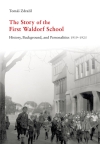
THE STORY OF THE FIRST WALDORF SCHOOL
History, Background, and Personalities 1919–1925
Tomáš Zdražil
Waldorf pedagogy was born in a time of dire need following The First World War. Rudolf Steiner provided the spiritual foundations for this approach to education, including its methods of teaching, out of his comprehensive insights into human nature and based on his own diverse experiences as a student and teacher. It was the industrialist Emil Molt, inspired by his sense of social responsibility, who enabled the founding of the first Waldorf School in Stuttgart. After only a few months of preparation the new school opened on September 7, 1919.
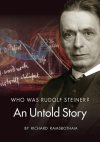
An Untold Story
Richard Ramsbotham
Who was Rudolf Steiner?
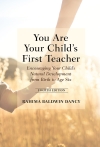
Ask that same question, seriously and not superficially, of anyone, out of love—who are you, really?—and even a half-revealed corner of the full truth will throw open a window into the whole world, its awesome interconnectedness, its mysteries and beauty. The true answer can hardly be contained in a single book, a single biography.YOU ARE YOUR CHILD'S FIRST TEACHER
Encouraging Your Child’s Natural Development from Birth to Age Six
Fourth Edition
Rahima Baldwin Dancy
“I feel strongly that we don’t need another authority or set of rules by which to raise children, and I remind parents that Steiner himself never had any children. But if we can enlarge our understanding of child and adult development to encompass the whole human being—body, mind, emotions, and spirit—then we will be better equipped to make our own decisions based on a combination of cognitive and intuitive knowledge.” (preface)